Maintenance Rights of a Man in India
Can a husband claim maintenance from his wife, and who keeps the gifts he received at the wedding? A look at how Indian courts weigh need over gender, where the law stops short, and what reform could look like.
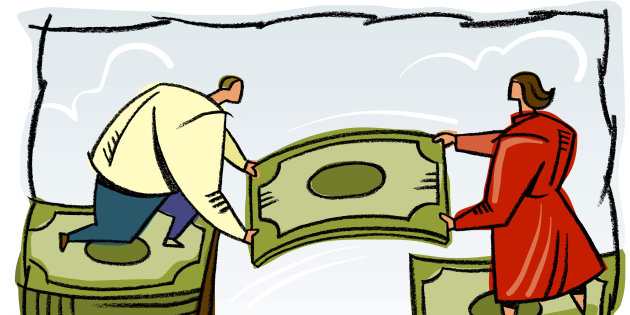
After divorce, a wife has the right to keep all of her streedhan, but can the husband also take his gifts with him? What factors does the court consider in telling genuine gifts apart from dowry? And where the wife earns more than the husband, who maintains whom? Such questions are rarely raised, because in India the assumption has always been that the wife is the weaker party. Today, when many wives earn as much as their husbands, that is not always true. Yet the law has not changed in any significant way to account for these exceptions.
Answering these questions means looking at two issues:
- Who owns the gifts received by the husband in a marriage?
- Is maintenance decided on the basis of gender or need?
Table of ContentsShowHide
What does the statute say?
The Special Marriage Act, 1954 speaks specifically of the husband maintaining the wife. The Hindu Marriage Act, 1955 is unambiguous in the other direction. Section 24 lets either spouse without sufficient independent income claim interim maintenance, without specifying whether the claimant must be the husband or the wife. Section 25 extends the same entitlement to permanent alimony.
As held in Rajnesh v Neha (2021) 2 SCC 324, the law on this point is gender neutral. The Act uses the words "the party claiming maintenance", not "wife" or "husband". It also requires both parties equally to file affidavits disclosing their assets and liabilities.
The real question is why, when the Hindu Marriage Act treats both parties equally, the same equality is not seen to that extent in practice. Courts have granted maintenance to a husband only in certain cases.
In Rameshwaram v Ambigeswari (Madras HC, 22 March 2013), the Madras High Court ordered the wife to maintain the husband, who was unable to earn because of medical issues. In Ashok v Rajana, the family court held in the husband's favour that non-economic contributions, such as helping with childcare and household work, should be recognised where the wife earns well and the husband has no steady income.
Even where the law provides for it, society still treats a man asking for maintenance as taboo. The idea of a man being financially dependent on his wife is not yet accepted, and as a result a man who genuinely needs to be maintained hesitates to ask for it.
Need or gender: what does the court consider?
A husband's claim to maintenance does not rest on sympathy. It is governed by the same test that governs a wife's. Section 24 of the Hindu Marriage Act requires the court to have due regard to the petitioner's own income and to the income of the respondent, and it nowhere limits the petitioner to the wife.
The Supreme Court in Neeta Rakesh Jain v Rakesh Jeetmal Jain (2010) 12 SCC 242 confirmed that the incomes of both parties have to be considered. In Bhagwan Dutt v Kamla Devi (1975) 2 SCC 386, the court framed the object as a standard of living that is neither luxurious nor penurious, assessed after taking the claimant's separate income into account.
Among the other factors to be considered, Rajnesh v Neha also includes whether the wife has sacrificed employment opportunities to raise children and care for the family.
Gifts, streedhan and dowry
Streedhan includes the gifts given to a bride, by the husband or by relatives on either side, before, at or after her marriage. The law on who keeps streedhan is settled. In Pratibha Rani v Suraj Kumar (1985) 2 SCC 370 and Rashmi Kumar v Mahesh Kumar Bhada (1997) 2 SCC 397, the Supreme Court held that streedhan is the absolute property of the woman, and that the husband and in-laws are merely trustees of it. The husband may use it in times of distress but is bound to restore it. Refusing to return streedhan to the woman attracts Sections 405 and 406 of the IPC, now Section 316 of the Bharatiya Nyaya Sanhita, 2023.
These cases, however, do not deal with gifts received by the husband. In Pratibha Rani, the court classified wedding gifts into three types:
- Articles meant exclusively for the bride's use.
- Articles meant for common use in the matrimonial home.
- Presents to the husband and his family.
The third category, though recognised by the court, was not decided upon. If gifts to the husband are governed by the general law of property, they should be his. The Dowry Prohibition Act, 1961 qualifies this: if the gifts given to the husband fall within the definition of dowry, they are not his property. Section 6 of the Act requires that any dowry received be transferred to the wife within the time it prescribes.
The gap outside the Hindu Marriage Act
The most widely used provision, Section 125 of the Code of Criminal Procedure, now Section 144 of the Bharatiya Nagarik Suraksha Sanhita, 2023, speaks of the "wife", including a divorced wife. Sections 36 and 37 of the Special Marriage Act, 1954 and Section 18 of the Hindu Adoptions and Maintenance Act, 1956 are similarly confined to the wife. Beyond the Hindu Marriage Act, the husband has no claim.
The standard justification for these remedies is social justice for women. That argument held in earlier times, but where husband and wife now often earn equally and contribute equally to the matrimonial home, it is no longer entirely true. Laws, and the courts' interpretation of them, should evolve with the times.
Article 15(3) of the Constitution permits special provisions for women, but that does not mean the law should deny men a need-based remedy. The legislature can look to the Hindu Marriage Act as a model for extending such a remedy to either spouse. Gendered provisions reflect a legislative choice, not a constitutional compulsion. The object of Section 144 of the BNSS should be to protect the dependent party, irrespective of gender, and the better route to reframing these provisions is through the legislature.
Comparison with other personal laws
Under the Hindu Marriage Act, a husband may claim interim and permanent maintenance if he does not have sufficient independent income. The Hindu Adoptions and Maintenance Act, however, gives that remedy only to the wife. Like the Hindu Marriage Act, the Parsi Marriage and Divorce Act, 1936 allows either spouse to claim maintenance.
Under Muslim personal law, the husband is obliged to maintain the wife. The law does not support any claim by the husband against the wife, and mahr belongs exclusively to the wife. The secular statutes, the Special Marriage Act and Section 144 of the BNSS, confine the claimant to the wife.
Most laws favour the wife on the reasoning that women are generally more economically dependent. This is often true, but it is changing. As women are empowered, they are no longer limited to household work; they are going out to work and becoming financially independent. What is truly required is a need-based test, not one based on the gender of the claimant.
The way forward
Reform should begin by extending the Hindu Marriage Act's need-based model to Section 144 of the BNSS, the Special Marriage Act and all other personal laws.
One objection to such a model is that husbands could misuse the remedy. But Rajnesh v Neha already authorises action for false statements in maintenance pleadings, and its disclosure affidavits apply to both parties. The safeguards against abuse are therefore procedural, and can be applied immediately when either party misuses the remedy.
The disclosure affidavits required by Rajnesh should be made statutory for all matrimonial claims, so that income is established on evidence and not on mere assertion. Sanctions for false statements should apply symmetrically, covering both false income claims and false dowry allegations.
In essence, a maintenance claim should be decided by need and evidence, not by the gender of the person making it.
FAQ
Frequently asked questions
Can a husband claim maintenance from his wife in India?+−
Yes, in some cases. Under Sections 24 and 25 of the Hindu Marriage Act, 1955, either spouse who does not have sufficient independent income can claim interim maintenance and permanent alimony. The Supreme Court in Rajnesh v Neha (2021) confirmed that these provisions are gender neutral.
Can a husband claim maintenance under Section 144 BNSS (formerly Section 125 CrPC)?+−
No. Section 144 of the Bharatiya Nagarik Suraksha Sanhita, 2023 allows a "wife", including a divorced wife, to claim maintenance, but gives a husband no claim against his wife. The Special Marriage Act, 1954 and the Hindu Adoptions and Maintenance Act, 1956 are similarly limited to the wife.
What does the court look at when a husband asks for maintenance?+−
The same factors it applies to a wife. The court considers the income of both parties, the standard of living during the marriage, and whether the claimant genuinely lacks sufficient independent means. Both spouses must file affidavits disclosing their assets and liabilities, as required by Rajnesh v Neha.
Who keeps the gifts given to the husband at the wedding?+−
The Supreme Court has recognised presents to the husband and his family as a separate category of wedding gifts, but has not decided who owns them. Under general property law they would ordinarily be his. However, if a gift falls within the definition of dowry under the Dowry Prohibition Act, 1961, it is not his property and must be transferred to the wife.
Does a wife have to return her streedhan after divorce?+−
No. Streedhan is the absolute property of the wife, and the husband and in-laws hold it only as trustees. A husband or in-law who refuses to return streedhan can face criminal proceedings for criminal breach of trust under Section 316 of the Bharatiya Nyaya Sanhita, 2023.
This article provides general information only and does not constitute legal advice.